

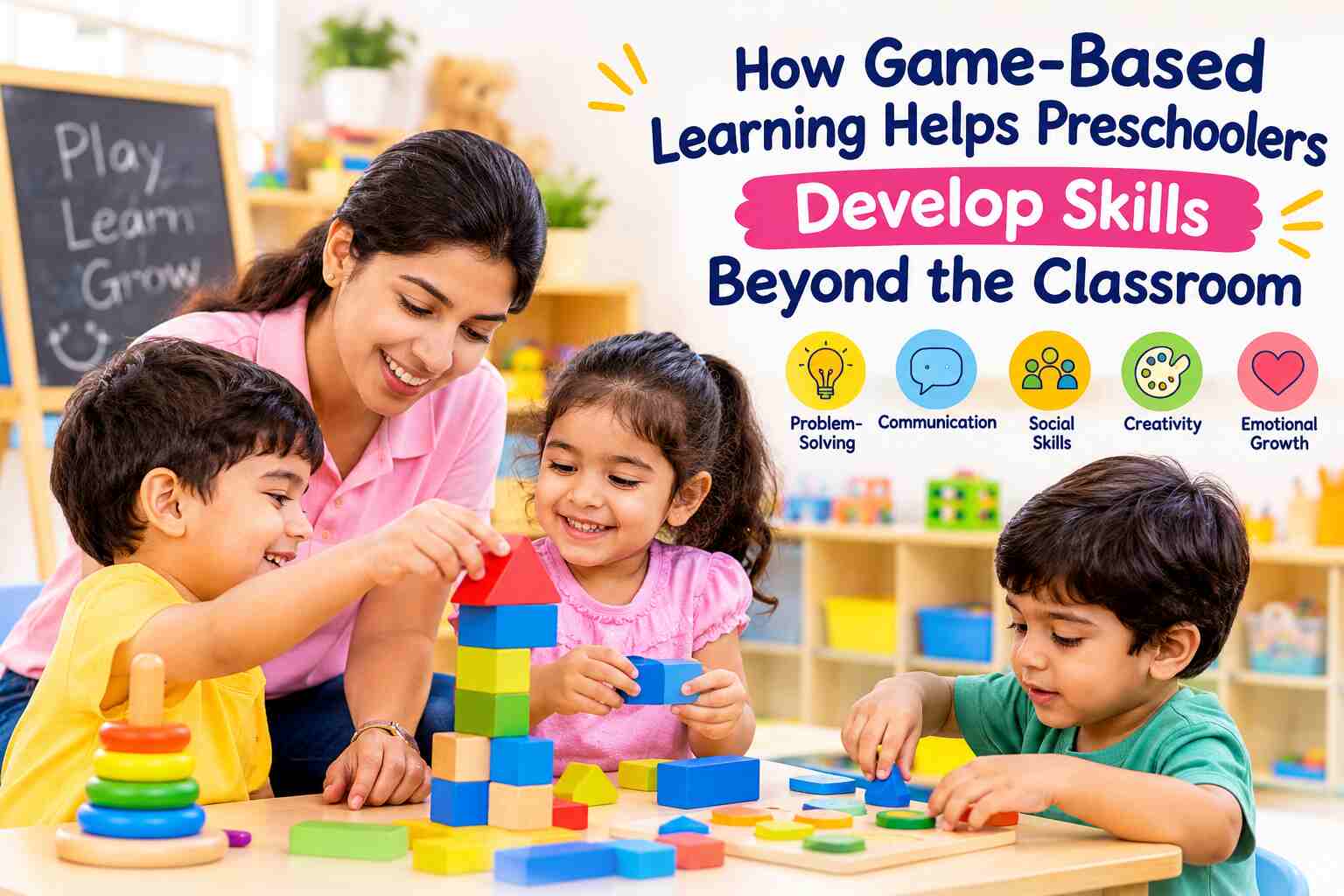
Learning does not happen all the time by reading from a book or being told. On some occasions, they may learn better by creating towers, matching images, engaging in pretend play and overcoming challenges. This is done in a fun way, while the children learn about their environment.
Pastels Preschool and Daycare believes that children at an early age need to have some time to explore, question and learn from experience. Between the ages of 2 and 5 years old, play activities will assist children in developing vital skills. Understanding the benefits of game-based learning for kids helps parents see how simple activities can support learning, confidence and overall development.
What Is Game-Based Learning in Early Childhood?
Learning through games is the method of using simple games and playful exercises for the introduction of knowledge and development. Children learn not through rote but through participation and exploration.
For instance, working with blocks of different colors teaches children about shape, size, and pattern. Playing the role of a shopkeeper in a grocery store teaches counting, communication, and decision-making.
These experiences allow children to learn at their own pace while enjoying the process. They also show the benefits of game-based learning for kids in everyday situations.
Why Children Learn Better Through Games
In young children, the more they see and feel, the better they understand. Games allow them to think about new concepts without having to come up with the right answers all the time.
Puzzle games teach patience, whereas group games teach children how to listen and work together as a team. Practicing the same activities repeatedly will help them memorize what they have learned.
This makes the benefits of game-based learning for kids especially valuable during their early developmental years.
6 Important Benefits of Game-Based Learning for Kids
1. Thinking and Problem-Solving
Building blocks and puzzles encourage children to find solutions independently. When a tower falls, they may try placing bigger blocks at the bottom. Such small experiments develop logical thinking.
2. Language and Communication
Storytelling and pretend conversations introduce new words. A child playing shopkeeper might ask, “What would you like to buy?” These interactions gradually improve vocabulary and speaking confidence.
3. Social Skills and Teamwork
Group games teach children to share toys, wait for their turns and listen to others. They also learn how to play together and respect different ideas.
4. Emotional Understanding
Children do not always win games or get what they want. With gentle guidance, they learn to handle disappointment, practise patience and understand other people’s feelings.
5. Creativity and Imagination
During pretend play, a cardboard box can become a car, a kitchen, or a little house. Such activities encourage children to create their own ideas and stories.
6. Early Maths and Recognition
Counting toys, matching shapes and sorting colours introduce basic mathematical concepts. Handling real objects makes numbers and patterns easier to understand.
These are some key benefits of game-based learning for kids that support development beyond academics.
5 Simple Game-Based Learning Activities for Preschoolers
Parents and teachers can introduce enjoyable activities using everyday materials. At Pastels Preschool and Daycare, playful learning experiences encourage children to explore and participate.
- Colour and shape hunts: Ask children to find red objects or something shaped like a circle. This improves observation skills.
- Building block challenges: Encourage children to build a tower or small house. This develops creativity and problem-solving.
- Picture matching: Let children match similar pictures to improve memory and concentration.
- Pretend shop: Use toy fruits and play money to introduce counting, communication and turn-taking.
- Storytelling games: Show children a picture and ask them what might happen next. This encourages imagination and language development.
Children attending a Playgroup school in Dilshad Garden can also enjoy these activities as part of their everyday learning routine.
How Teachers Make Learning Through Games More Meaningful
Teachers assist the children in gaining much from play by noticing their interests and guiding them accordingly. They may give them some challenging tasks, ask questions and guide them to come up with answers on their own. These guided experiences highlight the benefits of game-based learning for kids through exploration and interaction.
For instance, if a child finds it difficult to solve a problem, then teachers give them some hints rather than solving that problem themselves. In Pastels Preschool and Daycare Center, the playful learning activities allow children to discover new things and interact with other children.
At Pastels Preschool and Daycare, playful learning opportunities help children explore new ideas, interact with classmates and develop everyday skills in a supportive environment.
How Parents Can Encourage Game-Based Learning at Home
Learning doesn’t necessarily require expensive toys. Children can have fun while developing skills through ordinary activities.
- Count the fruits as you place them in a basket.
- Look for colours as you dress up.
- Make pretend food using safe toys.
- Tell stories from picture books.
- Play taking-turns games together.
Such small activities help parents understand the benefits of game-based learning for kids beyond the preschool classroom.
Let Your Child Learn Through Everyday Discoveries
Every child deserves opportunities to explore, play and grow at their own pace. At Pastels Preschool and Daycare, we encourage curiosity, creativity and meaningful interactions through enjoyable early learning experiences.
Looking for a caring learning environment for your little one? Contact us to learn more about our programmes. You can also visit our Google Business Profile to explore our school information.
Frequently Asked Questions
What is game-based learning for preschoolers?
It uses games and playful activities to help children understand concepts, develop skills and learn through experience.
At what age can children start game-based learning?
Children can enjoy simple play-based activities from an early age. Activities should suit their interests and developmental abilities.
Does game-based learning improve problem-solving?
Yes. Puzzles, sorting games and building blocks encourage children to experiment, think independently and find solutions.
Can parents encourage game-based learning at home?
Yes. Counting toys, matching colours, storytelling and pretend play are simple activities parents can enjoy with their children.
Is game-based learning useful for overall development?
Yes. It supports thinking, communication, creativity, social interaction and emotional development alongside early academic skills.
One thought on “How Game-Based Learning Helps Preschoolers Develop Skills Beyond the Classroom”