

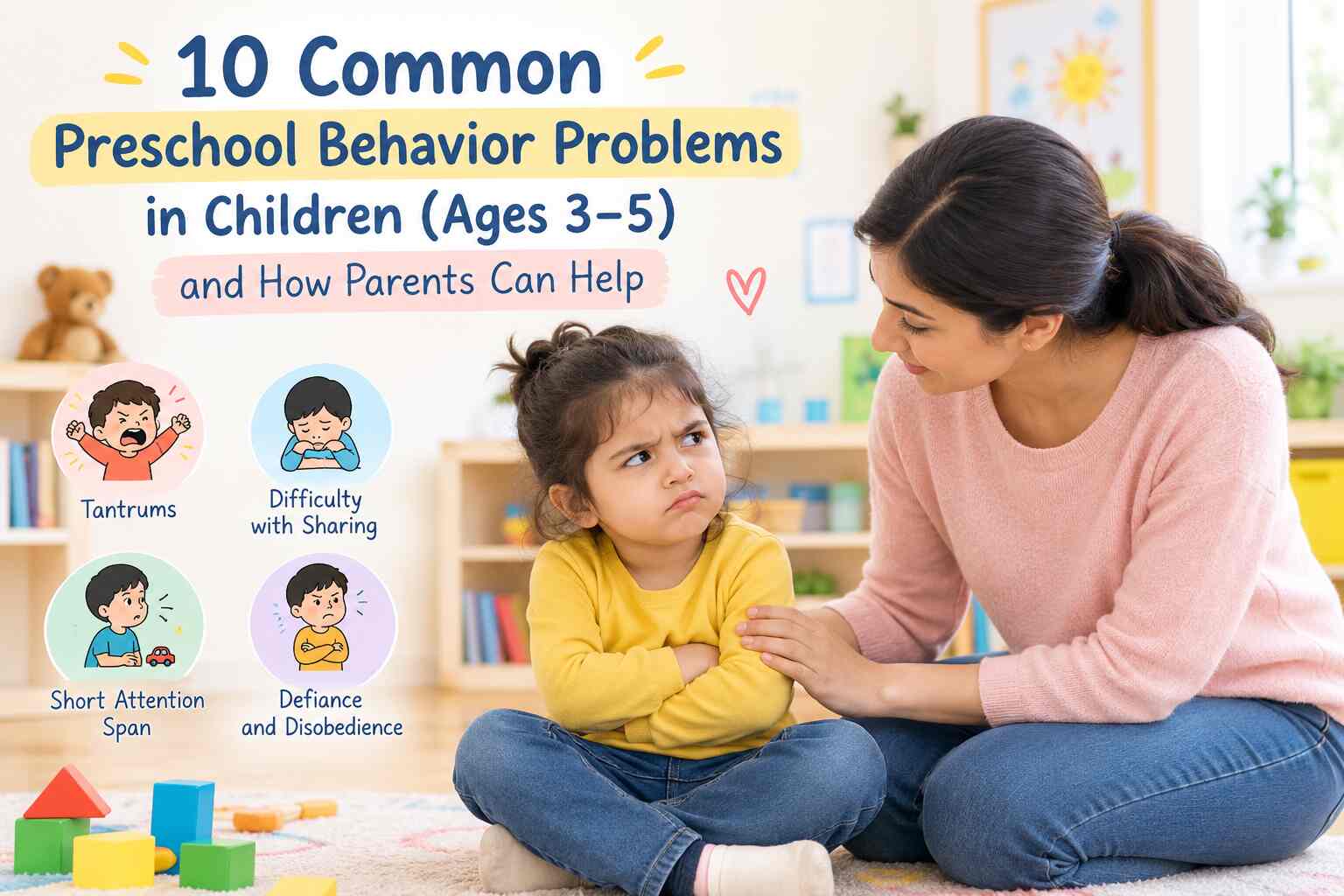
Children from 3 to 5 years old are in the process of developing many emotional and social abilities and skills, including the ability to show and understand feelings, rules, and social skills, along with independence. This can cause numerous social and emotional challenges, including problems with school refusal, tantrums, and not sharing. This guide on Preschool Behavior Problems can help your understanding of different behaviors and your response to them. At Pastels Preschool and Daycare, we use diverse techniques to provide both your child and you, as a parent, with a support system. We understand choosing the right play school in Shalimar Garden for your child can be difficult. Knowing about the Preschool stage will assist you in making an informed choice.
What Causes Preschool Behavior Problems?
Preschoolers don’t fully understand how to communicate their needs and wants. They have developing self-regulation and control. This makes them easily overwhelmed by external and internal stimuli. Rules are understood, but often not followed. This is not because preschoolers are being willful or disobedient.
Every child is an individual and evolves at their own pace. Parents can facilitate the evolution of their child’s behavior by maintaining the structure and order of their home and providing positive emotional support to their child. This can help alleviate behavioral challenges.
10 Common Behavioral Challenges in Preschoolers and How Parents Can Help
1. Separation Anxiety
The child can experience too much fear when he/she is separated from the parent, especially if the child has never attended preschool before. The reaction to being separated can manifest itself in different ways, depending on the child, such as crying, hugging the parent tightly, among others.
How parents can help: When dropping off your child to attend school, ensure that there is always a quick goodbye ritual that the child is aware of. You should also tell your child that you will be back to fetch him/her from school. Avoid leaving the child alone without giving him/her goodbyes.
These Preschool Behavior Problems often become easier to manage with patience and consistency.
2. Temper Tantrums
There are cases when children may become highly emotional because of their dissatisfaction with something. In this case, they feel very nervous and may begin to scream, cry, and even throw things.
How parents can help: Try to remain calm. This will help your child calm down as well. Once your child is calm, try to get your child to express their feelings with words. It may also be helpful to talk to your child and explain to them that they should not scream or throw things, as that will not help them get what they want.
3. Not Listening to Instructions
Preschoolers typically ignore instructions when they are too easily distracted or over-stimulated by multiple, quick-succession instructions.
How parents can help: Limit your instructions to one at a time. Be sure to capture your child’s attention before giving the instruction. Furthermore, recognize and appreciate your child’s behavior when they properly respond to instructions.
4. Inability to Share or Take Turns
Preschoolers can be easily frustrated when dealing with issues of sharing or taking turns to play.
How parents can help: Encourage taking turns through play. Use language to promote turn-taking and compliment your child when they successfully take turns. Turn-taking practices develop children’s Preschool behavior as well as their social skills and help manage Preschool Behavior Problems related to interactions with other children.
5. Hitting, Biting, or Pushing
Children often times use physically interacting with peers to express their emotions due to a lack of ability to verbalize their emotions.
How parents can help: It is very important that you stop this behavior. Explain to your child that biting and hitting behavior is not acceptable and that they should use verbal expressions such as “I am upset.” or “Stop doing that.” Have your child practice this. Remember to reward them when they exhibit this behavior.
6. Trouble following routines
Kids generally tend to struggle with transitions from one activity to another; for example, switching from playtime to mealtimes or switching from playtime to bedtime.
How parents can help: Having a schedule works well, and informing your child about the next activity is great. You need to let your child know about time constraints. Regular schedules will allow your child to know what they should be doing next.
7. Problems with Making or Keeping Friends
There are several reasons as to why your child may have problems making friends, those reasons may be such as: timidness or shyness in new social situations or shyness when participating in social activities.
How parents can help: Having play dates and helping your child come up with activities to do and social situations to participate in may help. It is very important to give your child time to build social skills and not push or force your child to make social connections. Helping your child build and practice their social skills early may be very beneficial.
Addressing Preschool Behavior Problems early can also support healthy social-emotional development.
8. Being easily distracted or having a short attention span
Preschool activities may become boring or repetitive for your child, causing your child to lose interest.
How parents can help: Parents may want to consider the interests of the child and what activities may be the most age- and developmentally appropriate for the child. Break bigger or long activities into smaller and simpler activities to do. This may help your child stay interested and engaged longer.
9. Refusing Everyday Tasks
Some children will also resist performing routine activities because these activities could be seen by the children as limiting their freedom. For example, children will resist dressing themselves and even putting away their toys.
How parents can help: Offer a set of restrictive choices. For example, let your child know that they have to get dressed, and ask them if they want to wear the blue or red shirt. Always praise your child for performing the task.
10. Frequent Emotional Outbursts
Children have difficulties expressing and/or controlling their emotions and, as a result, may become irritable and/or frustrated and/or sad and/or unhappy. This may lead them to cry, shout, and/or become withdrawn.
How parents can help: To help the child express the emotion they may be feeling, you can say “It seems that you are frustrated because you are unable to do…” and “It’s ok to feel frustrated.” Also, demonstrate to the child relaxation techniques such as deep breathing and/or taking a break. If the child is unable to control these emotions, leading to prolonged outbursts, contact a child psychologist for further help.
Common Behavioral Challenges in Preschoolers: Practical Parenting Tips
Positive discipline of preschoolers is a process of instruction, not scare or embarrassment. Here are some tips:
- Recognise positive behaviour: Specifically praise the behaviour of waiting quietly or tidying up.
- Keep rules consistent: Make expectations clear at home and coordinate with teachers.
- Listen before correcting: Find out what happened before deciding how to respond.
- Model self-control: Children learn emotional regulation by watching how adults handle frustration.
- Work with teachers: Share observations about triggers, routines, and strategies that help your child.
According to the National Association for the Education of Young Children (NAEYC), parents should promote positive behavior, practice difficult skills, and model proper responses.
For those interested in a Preschool nursery school in Dilshad Colony, it is good to ask teachers about their practices with social-emotional skills and positive behaviors.
When Should Parents Seek Extra Support?
As kids get better at communicating and managing their emotions, their behavior problems usually get better too. If behaviors do not improve and concern is raised about the child’s speech and social interaction or if the behavior jeopardizes the child’s and others’ safety and/or severely interrupts the child’s and others’ everyday activities, prompt professional attention is recommended.
The resources from the CDC regarding normal child development help identify the skills children acquire at different ages. You should discuss your concerns with your child’s health care provider.
At Pastels Preschool and Day Care, we recognize the significant impact positive collaboration between the child’s family and the child’s educator has on the child’s social development, behavior, and overall well-being. Therefore, we work to create positive interactions for children that help them build positive behavior.
Turn Everyday Challenges into Learning Opportunities
Preschool Behavior Problems do not define a child. With patience, clear boundaries, and encouragement, parents can help children learn healthier ways to communicate, manage emotions, and build friendships. Understanding Common Behavioral Challenges in Preschoolers is an important first step towards helping children feel safe, confident, and ready to learn.
Ready to find the right preschool environment for your child? Contact Pastels Preschool and Daycare to discuss your child’s needs and book an appointment today. You can also visit our Google Business Profile to learn more about our preschool and daycare services.
One thought on “10 Common Preschool Behavior Problems in Children (Ages 3–5) and How Parents Can Help”